What happened on 3 September 2026
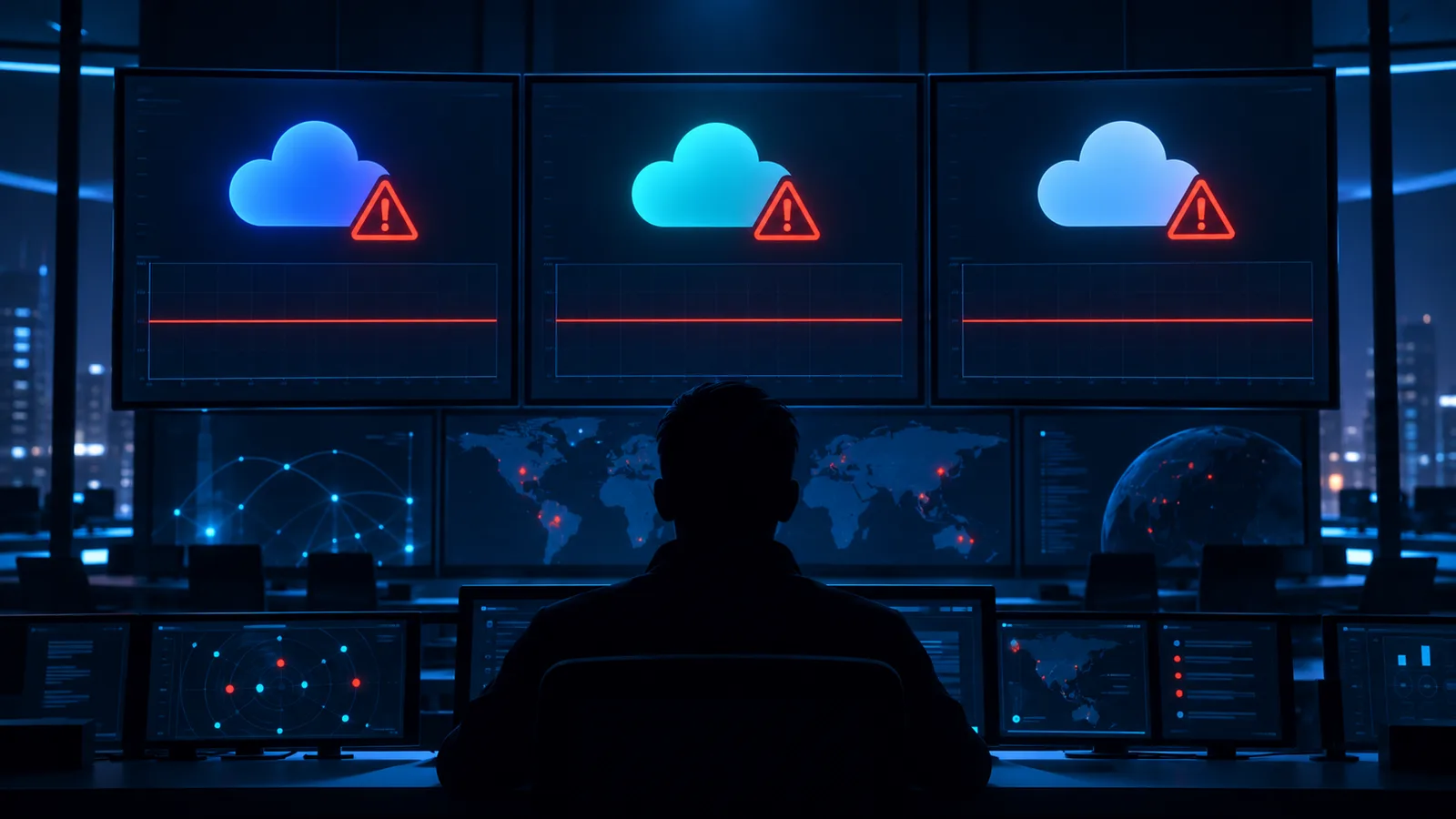
During the US morning (evening in Thailand), users worldwide found ChatGPT, Claude and Grok failing or responding extremely slowly at almost the same time, prompting speculation about a shared cause. The companies later explained separate incidents: OpenAI attributed roughly 34 minutes of downtime to a routing error, Anthropic reported a partial outage lasting about three hours, and xAI pointed to a problem at its Memphis compute center. Cloudflare, AWS and Azure all confirmed normal operations that day, so there is no evidence of a single point of failure behind all three.
| Service | Stated cause | Approx. duration |
|---|---|---|
| ChatGPT / Codex (OpenAI) | Routing error | ~34 minutes |
| Claude (Anthropic) | Partial system outage | ~3 hours |
| Grok (xAI) | Memphis compute center issue | Same morning |
Why even giants go down
- Accumulated complexity — huge systems have thousands of moving parts; one bad route can ripple everywhere.
- Continuous deployment — frequent updates mean frequent chances for a bad config, however good the testing.
- No system is 100% — even the industry's strongest SLAs budget for some downtime.
- Chained dependency — countless apps call AI APIs; when the AI goes down, those apps go down too, even though their own servers are fine.
How it hits businesses
By 2026 many businesses have embedded AI into daily operations — customer-service chatbots, document drafting, automated workflows. When the AI services failed simultaneously, that work stopped instantly. The incident is a signal that AI has become critical infrastructure that needs a contingency plan, like electricity or internet connectivity — not just a nice-to-have tool.
A 6-step resilience plan
- 1Map your external dependencies — list which systems call external AI/APIs and what breaks when they fail.
- 2Keep at least one fallback — support more than one AI provider, or a manual mode so staff can keep working.
- 3Monitor and alert — know before your customers do, with uptime monitoring for your own systems and your dependencies.
- 4Read the SLA of every service you rely on — know what is guaranteed and how compensation works.
- 5Back up on the 3-2-1 rule — three copies, two media types, one stored outside your primary system.
- 6Rehearse yearly — walk through exactly what the team does, in order, when a key system or provider fails.
Choosing lower-risk infrastructure
- Pick providers that publish a clear uptime SLA (99.9%+) with written compensation terms.
- Run on a Tier III or better data center, which has redundant power and networking by design.
- Separate critical systems — web, database and backups should not share a single point of failure.
- Triplify Cloud guarantees a 99.9% uptime SLA from a Tier III Bangkok data center with Thai engineers watching 24/7 — with defined credit-back terms if we miss it.
Sources
- AI Chat Daily — OpenAI, Anthropic, and xAI hit near-simultaneous outages: aichatdaily.com/ai-news/openai-anthropic-xai-hit-near-simultaneous-outages-no-shared
- Neoteo — ChatGPT, Claude and Grok outages overlapped, but no common cause was confirmed: neoteo.com/en/chatgpt-claude-and-grok-outages-overlapped-but-no-common-cause-was-confirmed
- Info-Tech — Overlapping AI Outages Expose an Enterprise Resilience Gap: infotech.com/software-reviews/vendor-technology-notes/overlapping-ai-outages-expose-an-enterprise-resilience-gap